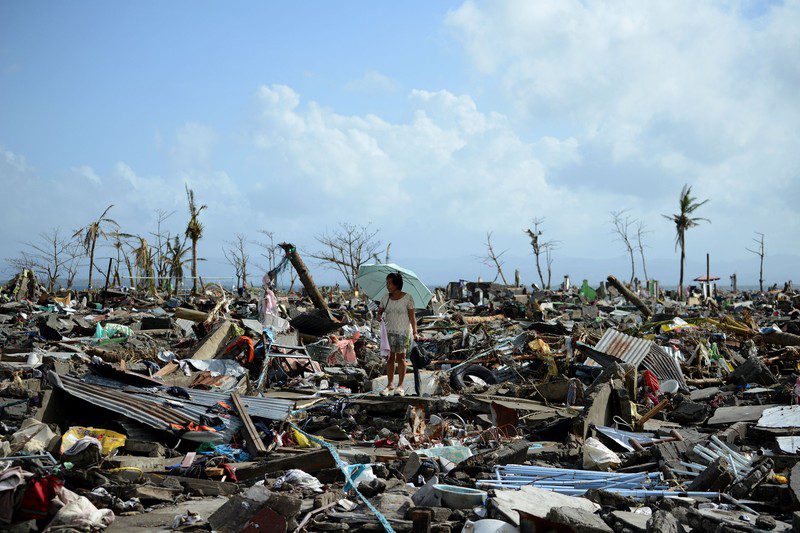
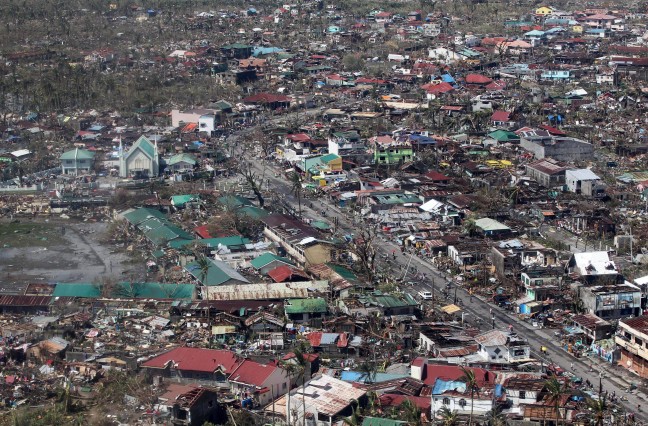
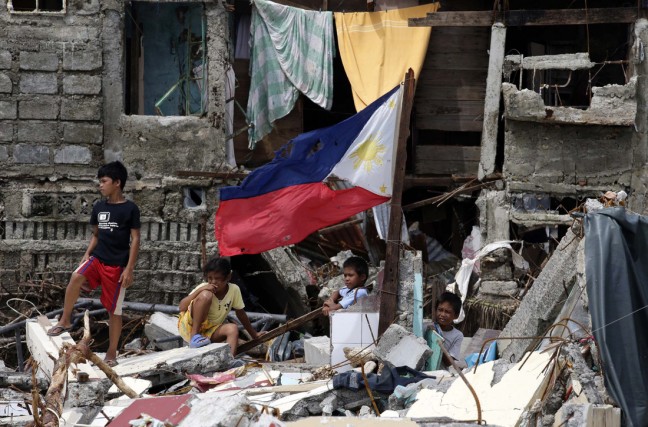
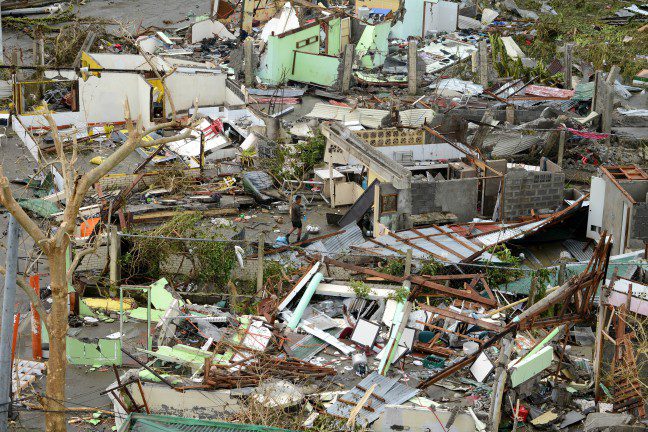
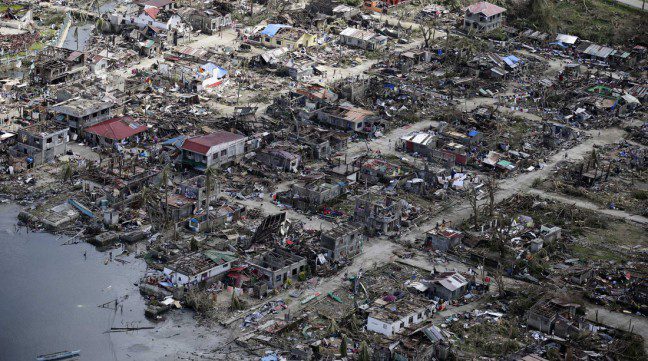
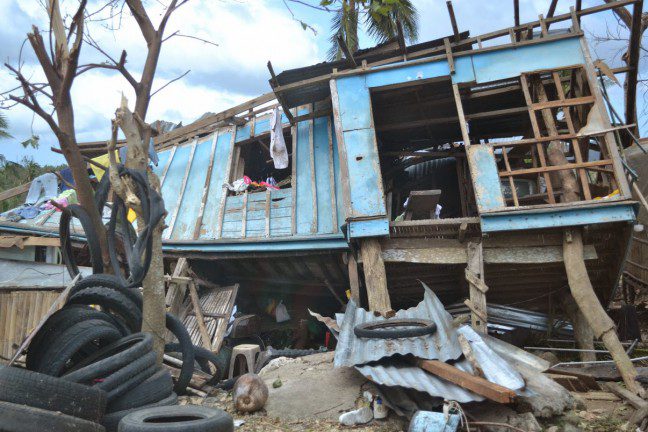
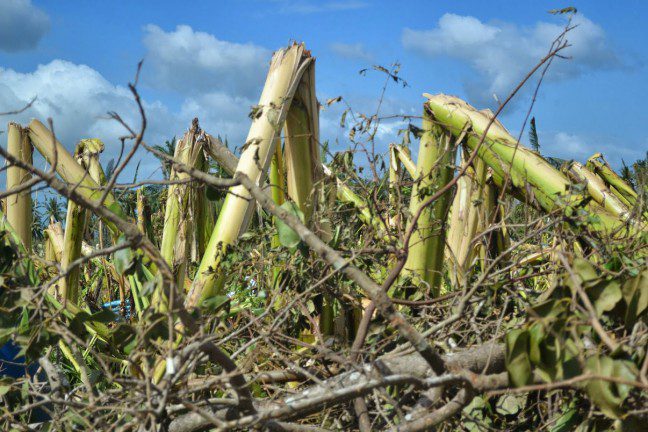
New reports from Oxfam’s rapid assessment team in Tacloban, one of the hardest hit provinces of Leyte, confirm 100 per cent of the city is devastated. Current estimates are that 4.46 million people – around 1 million families – from 36 provinces have been affected and more than 10,000 people are thought to have lost their lives.
Oxfam’s rapid assessment teams have been deployed to Samar, Leyte and Northern Cebu to provide emergency supplies of water, sanitation and shelter.
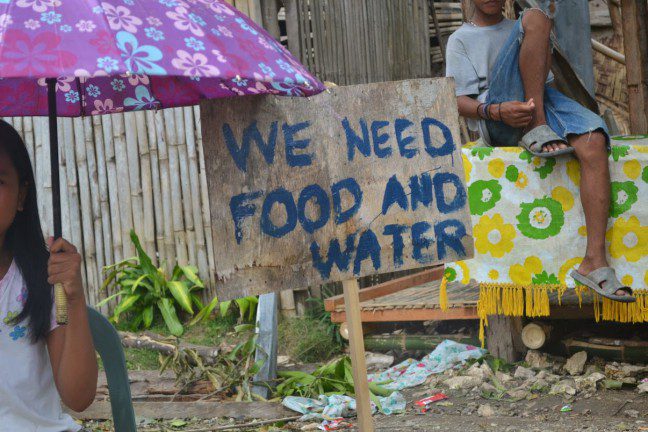
“The scene is one of utter devastation. There is no electricity in the entire area and no water. Local emergency food stocks have been distributed but stocks are dwindling. The immediate need is water, both for drinking and both for cleaning,” said Tata Abella-Bolo, a member of Oxfam’s emergency team in Cebu.
In Tacloban, a mother with two small children, who works selling fish with her fisherman husband, told Oxfam it was like a tsunami when the storm hit: “Many storms have passed here. But we did not expect a storm that brought a ‘tsunami’ with it. We only know of rain and wind. We did not expect the sea would devour the land.”
What we are doing
Oxfam is gearing up its aid efforts and aims to raise $17 million for the communities affected by the worst natural disasters to hit the area in years. We are looking to reach half a million people affected by Typhoon Haiyan.
Oxfam Australia Chief Executive Dr Helen Szoke said our emergency response will focus on providing basic needs of emergency shelter, water and sanitation while managing the risk of disease from contaminated water in devastated areas.
“There are also more dangers ahead for the millions of people in the Philippines affected by this typhoon with a very real risk of things like landslides, flooding, contaminated water and disease.” Dr Szoke said.
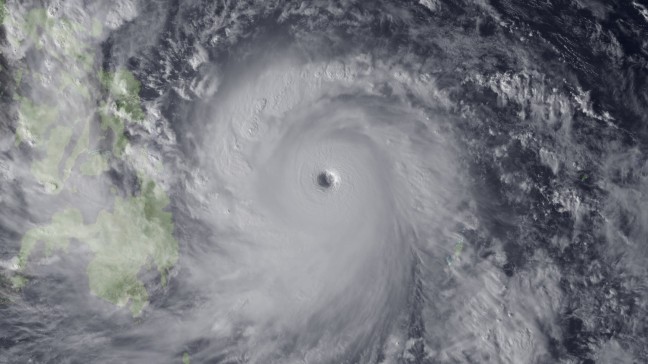
Typhoon Haiyan is reported as one of the strongest storms to ever hit land with winds over 300km per hour. The loss of life is still largely unknown as the Philippines struggles to provide water and shelter to millions of affected people.
To donate to Oxfam’s Typhoon Haiyan Appeal, please click on the link below or call 1800 034 034

Donate today to help us reach 500,000 people in desperate need of emergency aid after the devastation of Typhoon Haiyan.
Donate today to help us reach 500,000 people in desperate need of emergency aid after the devastation of Typhoon Haiyan.